
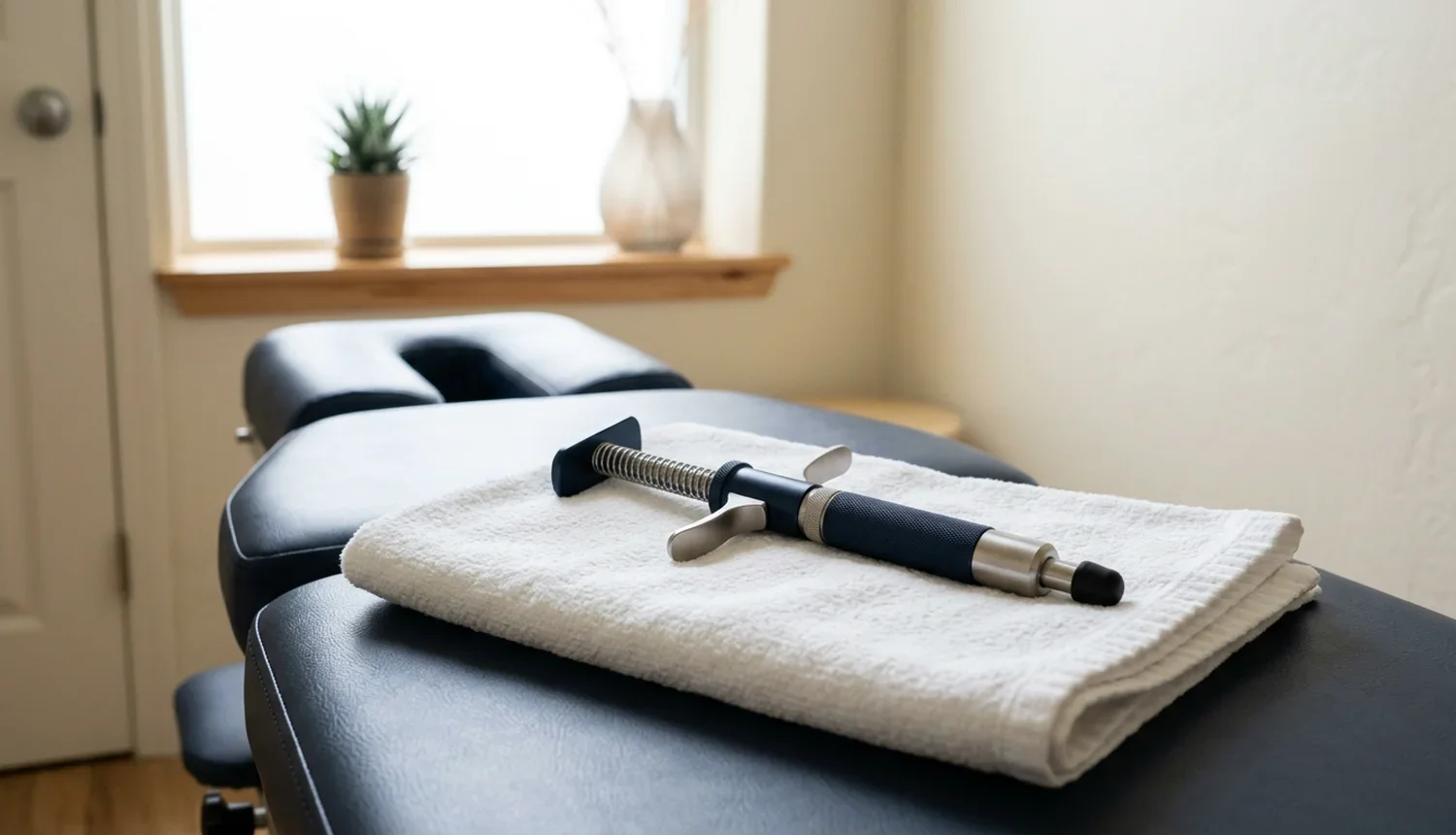
If you've had an adjustment at Complete Wellness Chiropractic, you've likely experienced Torque Release Technique — it's the technique Dr. Rob Cynowa uses most often with patients in Fort Mill and Tega Cay. But what's actually happening during that quick, precise adjustment? The science behind it is worth understanding.
Here's a closer look at how Torque Release Technique works and why it's central to care at Complete Wellness.
What Makes Torque Release Technique Different
Torque Release Technique (TRT) is a low-force, instrument-assisted chiropractic method. Rather than a manual, hands-on thrust, Dr. Cynowa uses a handheld instrument called the Integrator to deliver a precise, controlled adjustment to specific points along the spine.
The Integrator produces a thrust-and-recoil action in a fraction of a second — fast enough to create an effective correction while using significantly less force than a traditional manual adjustment. That combination of speed and precision is what makes TRT both gentle and effective for such a wide range of patients.
The Science Behind the Integrator
The Integrator was developed to reproduce what a chiropractor's hands do during a traditional adjustment, but with far greater consistency and far less force. Each thrust is delivered at the same speed and depth every time, which makes the technique highly reproducible — something that's harder to guarantee with manual adjustments alone.
TRT is also built on a neurologically-focused model of chiropractic care. Rather than treating the spine in isolation, the technique is designed to address the connection between the spine and the nervous system, with the goal of reducing interference and supporting the body's own capacity to function and heal.
Why Dr. Rob Uses TRT as His Primary Technique
Dr. Rob Cynowa is certified in Torque Release Technique along with several other chiropractic methods, but TRT remains the technique he relies on most in daily practice. A few reasons why:
- Its low-force delivery makes it comfortable for patients of nearly any age
- The precision of the Integrator allows for highly specific, targeted adjustments
- It's backed by a growing body of chiropractic research on reproducibility and effectiveness
- It fits naturally into a neuro-structural approach to care, which is the foundation of how Complete Wellness evaluates and treats patients
What a Torque Release Technique Visit Feels Like
Patients often describe TRT adjustments as quick, light, and barely noticeable compared to a traditional manual adjustment. There's no forceful twisting or audible "pop" required — just a fast, precise thrust from the Integrator at the exact point identified during your exam.
For many patients, especially those newer to chiropractic care or those who feel apprehensive about manual adjustments, this makes TRT an approachable and comfortable starting point.
Frequently Asked Questions
Does Torque Release Technique actually work if it's so gentle?
Yes. The Integrator's speed and precision allow it to deliver an effective correction without needing significant manual force behind it.
Is TRT backed by research?
Yes. Torque Release Technique has been studied for its reproducibility and effectiveness as an instrument-assisted adjusting method within the chiropractic field.
Can TRT be used on children and older adults?
Its gentle, low-force nature makes it a good fit for a wide age range, and Dr. Cynowa tailors every adjustment to the individual patient.
Does Dr. Rob use any other techniques alongside TRT?
Yes. While TRT is his most-used technique, Dr. Cynowa is also certified in Webster Technique for prenatal care and several other approaches, which he applies based on each patient's specific needs.
Experience the Difference at Complete Wellness
If you're curious about Torque Release Technique or want to understand why it's central to care at Complete Wellness Chiropractic, there's no better way than experiencing it firsthand. Schedule a visit today and see why Fort Mill and Tega Cay patients trust Dr. Rob's precise, research-backed approach to care.